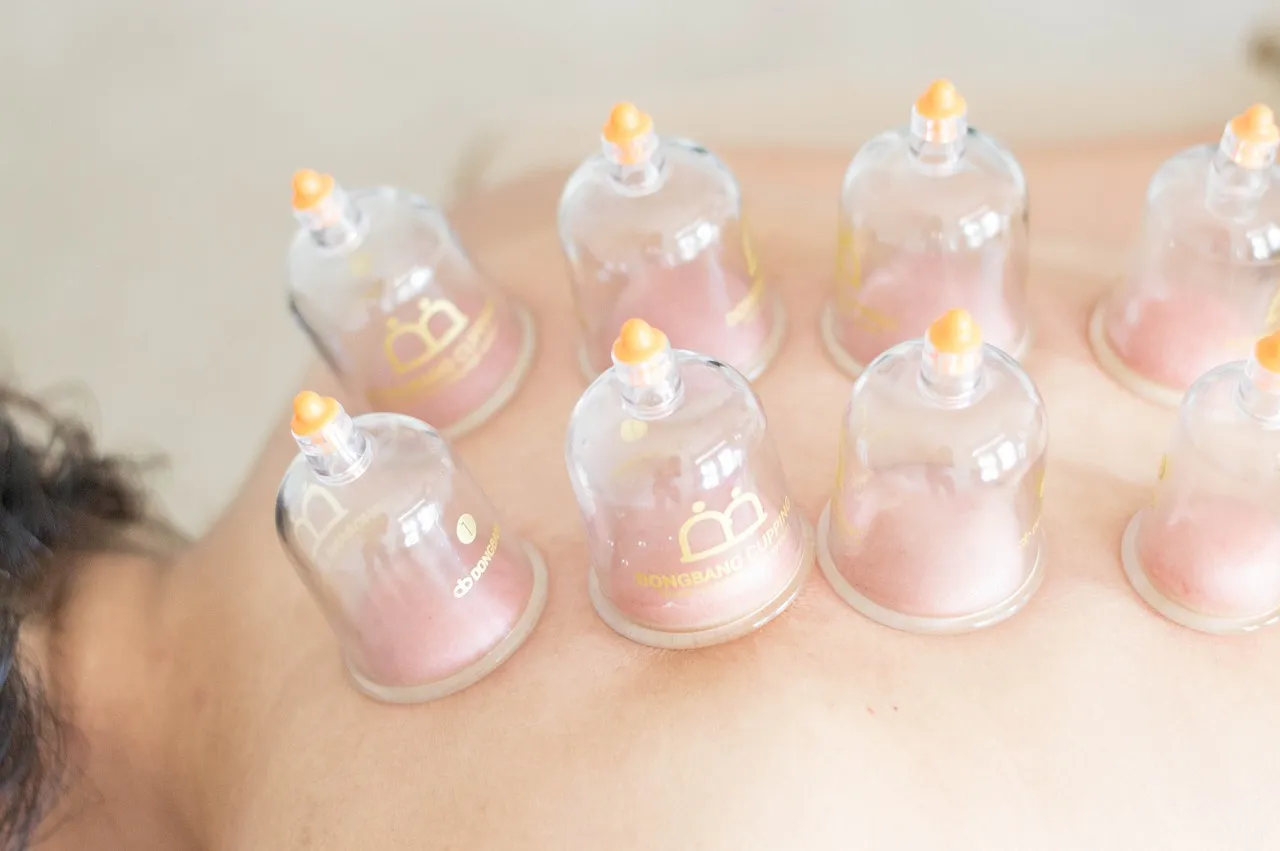
Pulling instead of pushing
Nearly every massage technique works by pressing into the body. Cupping flips that around. A cup placed on your skin creates gentle negative pressure, drawing skin, fascia and muscle upward. That creates space between layers of tissue and brings fresh blood flow to the area.
Many people describe the feeling as a deep stretch from the inside. It can reach tightness in a way that pressure alone sometimes can't, which is why we like combining the two.
Two ways we use cups
Your therapist will choose based on the area and what you need:
- Stationary cups left in place for a few minutes over a tight spot
- Gliding cups moved over oiled skin to work long muscles like the back or hamstrings
- Cups combined with gentle movement of the limb underneath
- Lighter or stronger suction depending on your comfort
Where cupping shines
Our clients most often ask for cupping on the upper back and shoulders, the low back, hamstrings, calves and IT band area. It's popular with lifters, swimmers, runners and anyone whose posture leaves their upper back in knots. During a busy training season it can be a nice way to get relief without a lot of deep pressure.
Those circles
Cupping often leaves round, darker marks. They're caused by blood being drawn toward the skin's surface, not by impact, and they typically fade over several days. Some people barely mark at all. Mark color doesn't tell you how well it worked. If you have a wedding, swim meet or photo shoot coming up, tell your therapist and we'll skip cupping or keep it out of sight.
When to skip it
Let your therapist know if you take blood thinners, bruise easily, have a bleeding disorder, are pregnant, or have irritated skin, a rash or a sunburn in the area. We'll adjust or leave cupping out. If you're unsure whether it's right for you, check with your doctor.